
Salesforce offers two quoting paths out of the box: the standard Quotes object and Salesforce CPQ (Configure, Price, Quote). The gap between them is substantial: in complexity, cost, and capability. Choosing the wrong path creates either an underserved sales team or an over-engineered system that no one wants to maintain.
This guide breaks down the key differences between Salesforce CPQ and standard Salesforce Quotes, when each is appropriate, and where tools like SilkQuote fit for teams that fall between the two options.
What Are Standard Salesforce Quotes?
Standard Salesforce Quotes are a native feature available in Salesforce Professional Edition and above. A Quote is a separate record linked to an Opportunity. It contains line items (Opportunity Products), pricing information, and a PDF output generated using a Quote Template.
What standard Quotes do well:
- Store and display line items from the Opportunity Product catalog
- Generate basic PDF documents using Lightning Quote Templates
- Track quote status and link multiple versions to a single Opportunity
- Sync pricing back to Opportunity Products when the quote is accepted
Limitations of standard Quotes:
- Quote Templates are rigid and difficult to design for branded output
- No automated pricing rules, bundles, or product configuration
- No tiered or volume-based pricing logic
- No discount approval workflows
- No subscription management or renewal automation
- PDF output is functional but rarely polished enough for enterprise buyers
What Is Salesforce CPQ?
Salesforce CPQ (formerly Steelbrick) is a managed package that extends the Quotes object with configure-price-quote functionality. It is built for organizations with complex pricing requirements that cannot be managed manually.
Core CPQ capabilities:
Product configuration. CPQ enforces product bundle rules. If Product A requires Product B, CPQ prevents reps from creating invalid configurations. This is critical for hardware, software, and service packages with dependencies.
Pricing rules. CPQ supports tiered pricing, volume discounts, partner pricing, promotional rules, and complex discount waterfall calculations. Pricing is calculated automatically rather than entered manually.
Approval workflows. CPQ includes a dedicated discount approval engine. When a rep offers a discount above a threshold, the quote routes to the appropriate approver before it can be sent. This enforces pricing governance without manual process steps.
Subscriptions and renewals. CPQ tracks contracted products, subscription terms, and renewal dates. It can automatically generate renewal quotes before contracts expire and manage amendments to existing subscriptions.
Contract generation. After a deal is won, CPQ can generate a contract document from the accepted quote, capturing terms, pricing, and product details in a legally formatted output.
Key Differences at a Glance
| Capability | Standard Quotes | Salesforce CPQ |
|---|---|---|
| Line item entry | Manual | Guided configuration |
| Pricing rules | None | Automated (tiers, bundles, discounts) |
| Discount approvals | Manual process | Built-in approval engine |
| PDF templates | Basic | Advanced (multiple templates) |
| Subscription management | None | Full lifecycle |
| Renewal automation | None | Automated |
| Cost | Included with Salesforce | ~$75/user/month + implementation |
| Implementation time | Days | Weeks to months |
| Admin complexity | Low | High |
When Standard Quotes Are the Right Choice
Standard Salesforce Quotes are appropriate when:
- Your product catalog is straightforward, with fixed-price items and no bundles or configuration dependencies
- Pricing is consistent and does not require automated rules or tiered discounts
- Your deal volume does not justify a $75+/user/month investment
- You are an SMB with a small admin team that cannot support a complex CPQ implementation
- Your primary quoting need is a professional PDF output, not pricing automation
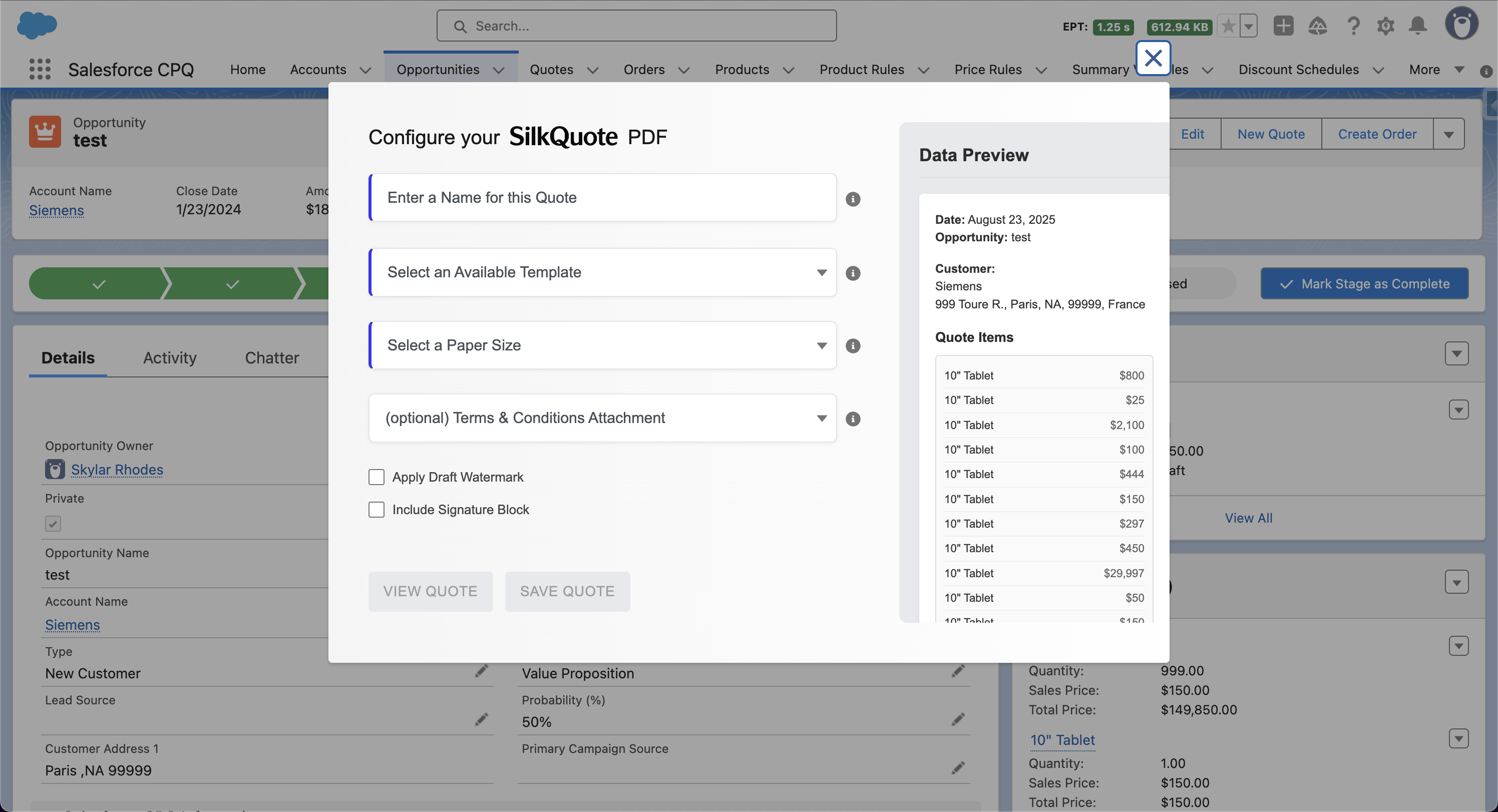
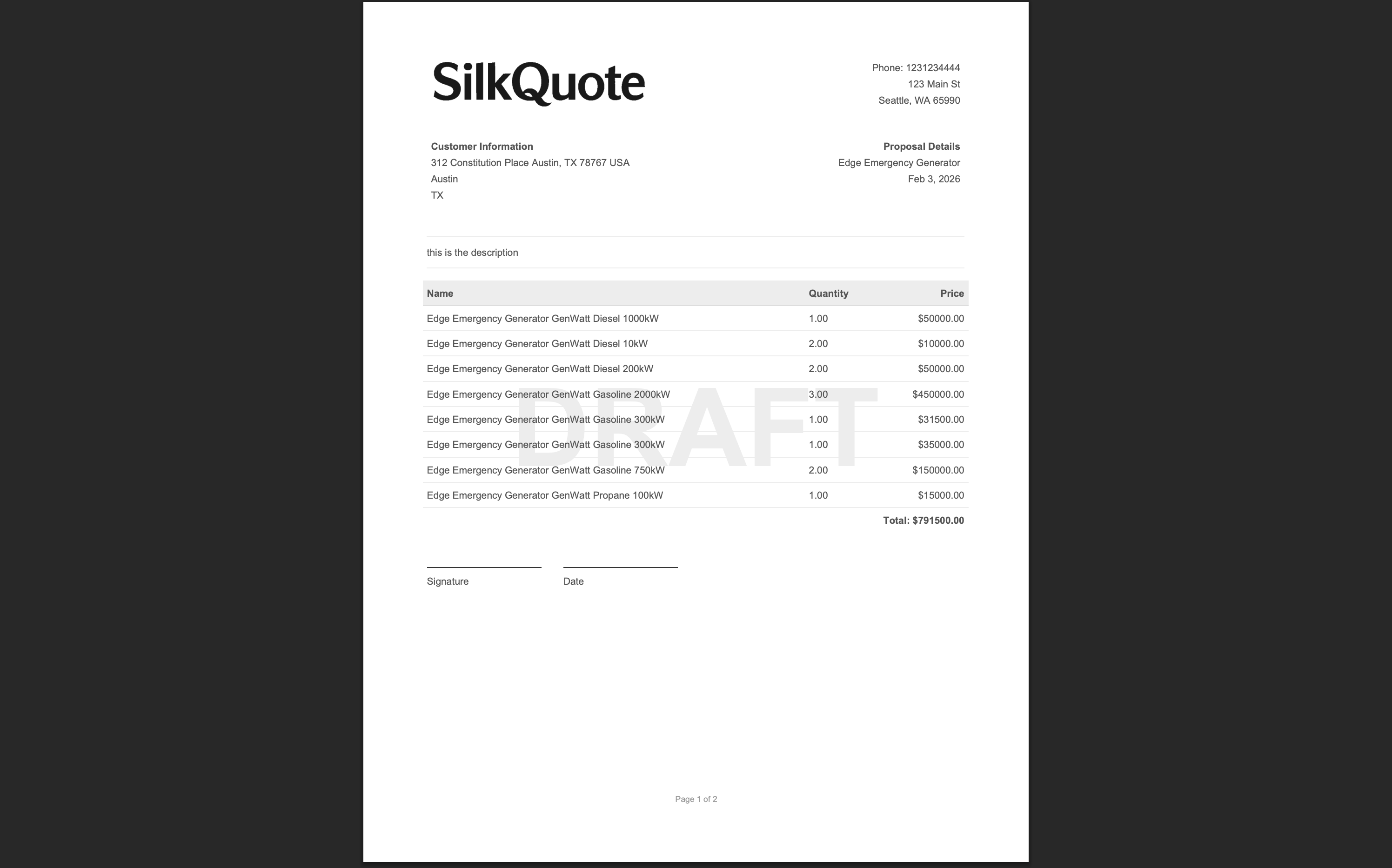
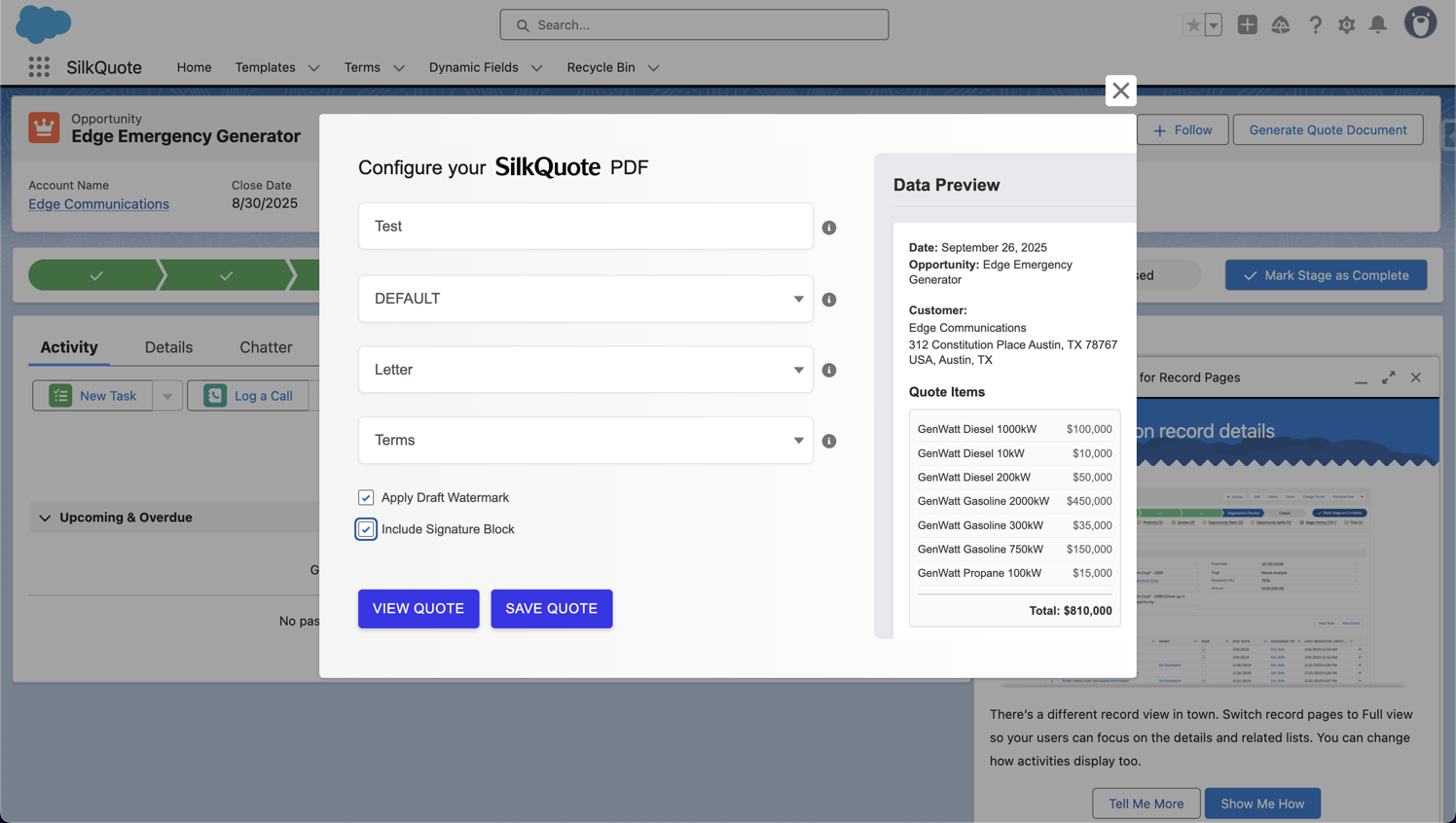
For these teams, the limitation of standard Quotes is not the pricing logic but the PDF output. Standard Quote Templates are difficult to design, brand, and maintain. This is where SilkQuote adds significant value: it produces professional, branded PDFs directly from Opportunity data without requiring the Quotes object at all.
When Salesforce CPQ Is Justified
Salesforce CPQ earns its cost when:
- Products require guided configuration with dependency rules (A requires B, A excludes C)
- Pricing involves complex logic: volume tiers, partner tiers, promotional pricing, or subscription terms
- Discount governance is critical: you need approvals when reps offer above-threshold discounts
- You manage subscriptions and need automated renewal quoting
- Your deal complexity means reps frequently misconfigure or misprice manually
CPQ is a significant investment. Budget $75/user/month in licensing plus $20,000–$100,000+ in implementation costs and ongoing admin overhead. For organizations with genuinely complex pricing, the ROI is clear. For everyone else, CPQ is overhead masquerading as a solution.
Where SilkQuote Fits
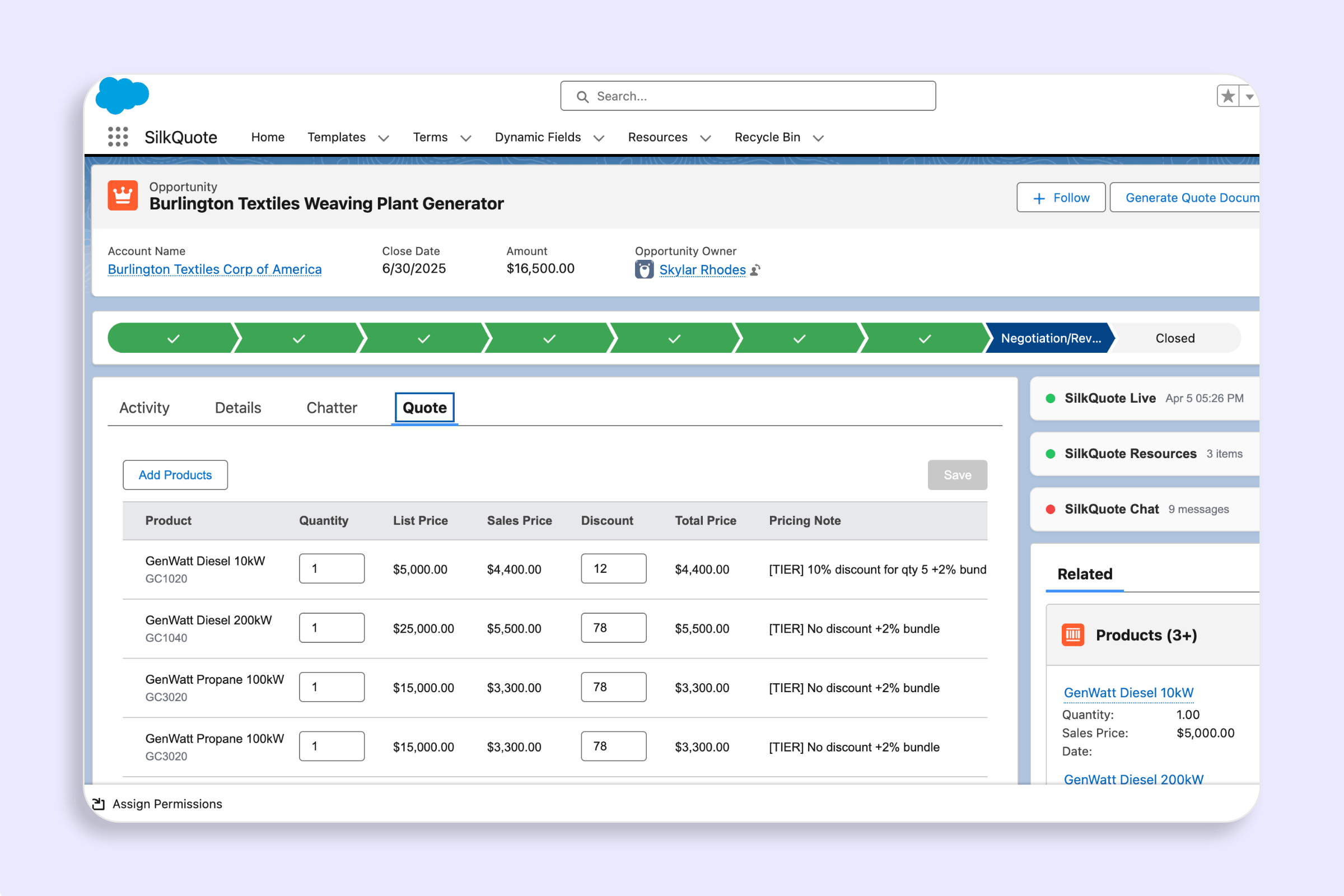
SilkQuote is built for teams that have outgrown standard Quote Templates but do not need CPQ’s pricing automation. It generates branded PDFs directly from Opportunity Products, supports conditional sections, drag-and-drop template design, and prospect acceptance, all without CPQ complexity or cost.
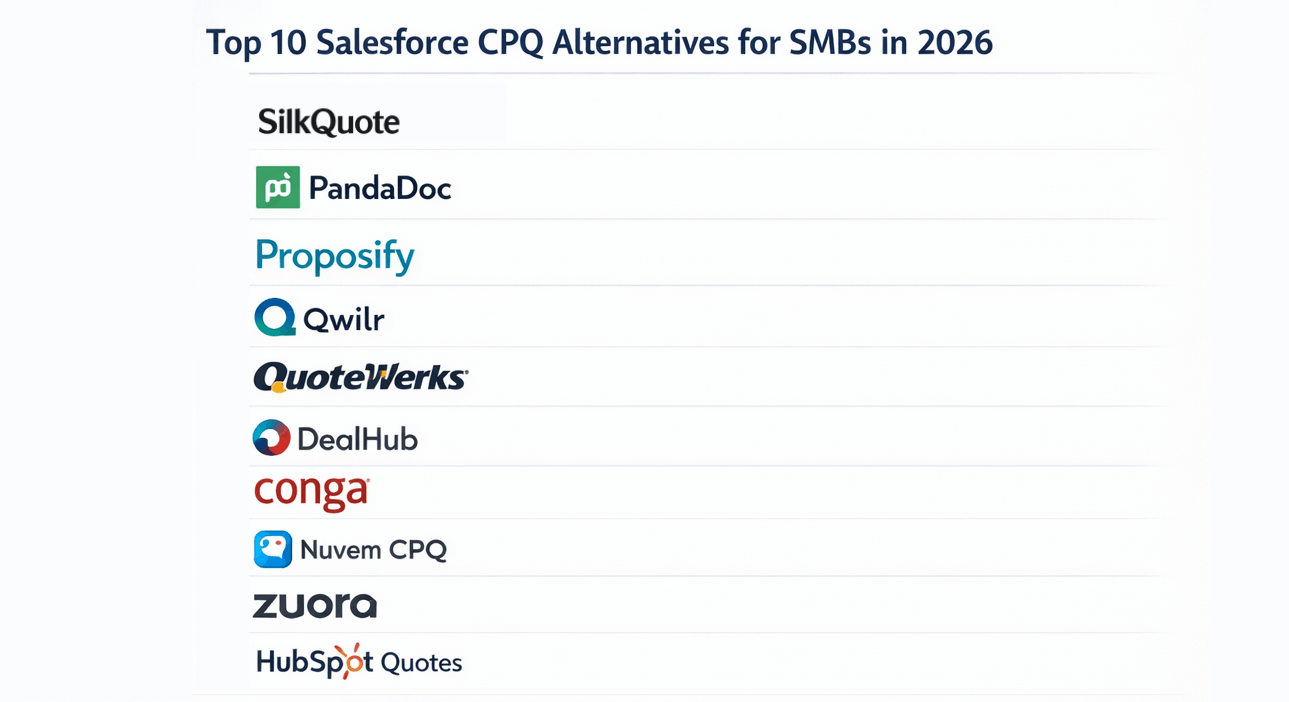
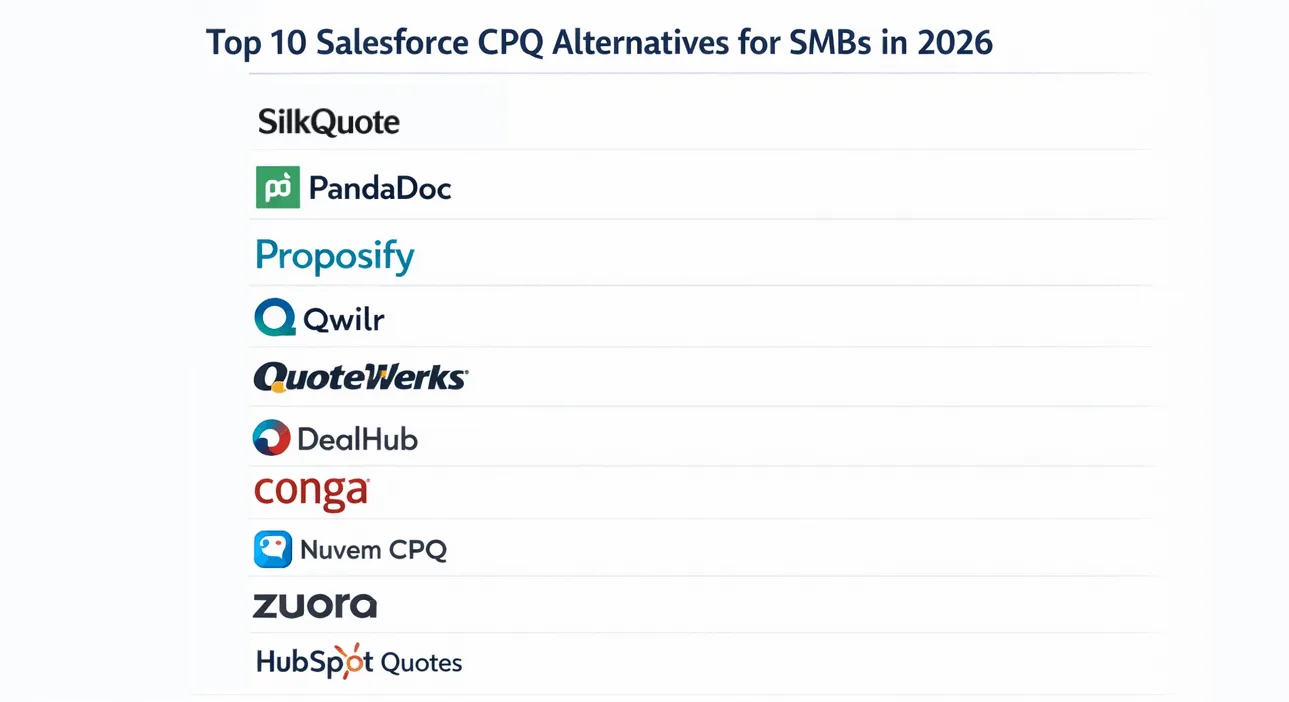
For a detailed comparison of how SilkQuote positions against CPQ and other tools, see the Salesforce CPQ alternative overview. For teams evaluating specific tool comparisons, the SilkQuote vs Salesforce CPQ: when to use each guide covers the decision criteria in detail.
Making the Decision
If your quoting friction comes from PDF quality, template design, and prospect tracking, add SilkQuote to your existing standard Quotes (or replace them entirely with Opportunity-based generation).
If your quoting friction comes from pricing configuration errors, discount governance, or subscription management, evaluate Salesforce CPQ.
Most growing Salesforce organizations start with SilkQuote and only consider CPQ when their pricing complexity genuinely demands it. Starting with SilkQuote means you can go live in a day, iterate quickly, and avoid a months-long CPQ implementation that your team may never fully adopt.
Install SilkQuote free from the AppExchange and generate your first professional quote today.
Salesforce CPQ adds automated pricing rules, product configuration logic, discount approvals, and subscription management on top of standard Salesforce Quotes. Standard Quotes provide basic line items and PDF generation. CPQ is appropriate for complex pricing scenarios; standard Quotes work for straightforward product catalogs.
Salesforce CPQ starts at approximately $75 per user per month, billed annually. This is in addition to your Salesforce license cost. Implementation typically adds $20,000–$100,000+ in consulting fees depending on complexity.
Yes. SilkQuote is a free native Salesforce app that handles professional PDF quote generation, custom templates, and prospect acceptance without CPQ's complexity or cost. It is the right choice for teams with straightforward pricing who need better-looking quotes and tracking.
SilkQuote works with standard Salesforce Opportunity Products. If your CPQ implementation populates Opportunity Products, SilkQuote can generate branded PDFs from that data. However, tight integration with CPQ-specific objects like CPQ Quote Lines may require configuration.
Choose standard Salesforce Quotes (or SilkQuote) when your pricing is straightforward, your product catalog is manageable without automated configuration, and you do not need subscription billing or complex discount approval workflows. CPQ adds significant overhead that most SMBs do not need.